What is the difference between a psychiatrist and a…
In today’s medical landscape, it can be confusing to understand the difference between a psychiatrist and other mental health clinicians. This is especially confusing because the term “psychiatrist” should be reserved for physicians who have completed a residency in psychiatry, but there are non physicians who use this term to describe themselves. People also commonly get confused between the difference between a psychiatrist and a psychologist. One important thing to notice is the amount of training that a psychiatrist receives in their specific role (as opposed to those who discuss their training in another job as if it is applicable to their current role). Malcolm Gladwell popularized the concept that it takes 10,000 hours to become an expert at something. What most people miss about this, is that it takes 10,000 hours of deliberate practice and receiving feedback on what you are doing wrong. If you do not have much training in an area, then go and do it for 10,000 hours without feedback or learning, you will be spending 10,000 hours continuing to do something poorly. If you have 10,000 hours of training in something similar but different from what you will be doing, then go do that different thing without extensive feedback or learning, you will not be doing it well.
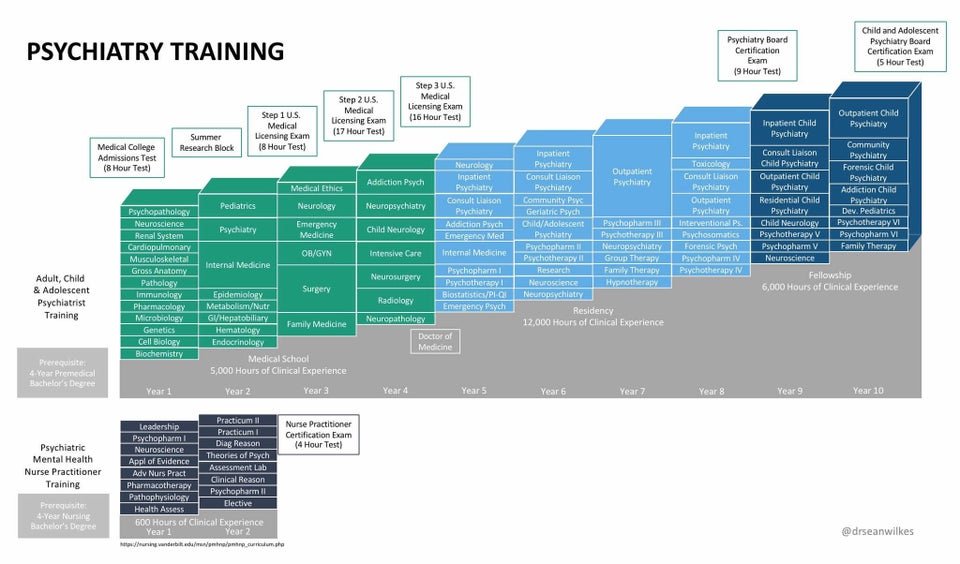
Infographic demonstrating differences in training between Psychiatrists and Psychiatric Mental health NPs
Psychiatrists
Psychiatrists are medical doctors (MDs/DOs) who specialize in mental health.
They can:
Diagnose psychiatric conditions
Prescribe and manage medications
Provide psychotherapy
Identify medical conditions that may be causing psychiatric symptoms
Training
A psychiatrist completes:
Bachelor’s degree
4 years of medical school
3–4 years of General Psychiatry Residency
Child & Adolescent Psychiatrists complete an additional 2-year fellowship
By the end of Child & Adolescent Psychiatry fellowship, a psychiatrist may have approximately 23,000 hours of supervised clinical training. Residents and fellows actively treat patients while receiving regular feedback from supervising physicians.
Psychiatry training is standardized through the Accreditation Council for Graduate Medical Education (ACGME). Training includes:
Psychotherapy, including CBT and psychodynamic therapy
Diagnosis and treatment of psychiatric conditions
Internal/family medicine
Neurology
Medication management
Why medical training matters
Psychiatric symptoms can sometimes be caused by an underlying medical condition.
Because psychiatrists are physicians, they are trained to consider whether symptoms are:
A primary psychiatric condition, or
A symptom of another medical problem
This medical training is an important difference between psychiatrists and non-physician mental health clinicians.
Even when a psychiatrist mainly manages medications, therapy training still matters. It allows psychiatrists to provide psychoeducation, coping strategies, identify interpersonal factors affecting symptoms, and incorporate therapeutic interventions into medication visits.
Nurse Practitioners (NPs)
Nurse Practitioners can diagnose and manage medications, including psychiatric medications.
However, NPs do not automatically receive psychotherapy training unless they complete additional training in therapy.
Training
NPs first complete nursing education, which may include a 4-year nursing degree, followed by an NP program.
Clinical training varies significantly between programs. Some provide extensive hands-on experience and supervision, while many others involve more passive observation. Gaining expertise requires active learning with feedback.
NPs receive approximately 600 hours of clinical training in their NP education.
NPs were originally developed in part to help address physician shortages, particularly in primary care.
Important things to know
In states such as North Carolina, a collaborating physician may be required. However, that physician does not necessarily have to specialize in the area of medicine that the NP practices. For example, an Internal Medicine physician (who has no training in seeing children) may provide collaboration to a MHNP who is seeing children with complex mental health concerns.
Also, when an NP says they are "board certified," the certification is through a nursing/NP board, not a physician specialty board. The training and certification requirements are different.
Psychologists
Psychologists are specialists in psychological assessment and psychotherapy.
Training
Typically, psychologists complete:
4-year undergraduate degree
5–7 years of doctoral training (PhD or PsyD)
1-year supervised internship
Additional required clinical hours
National licensing exam
PhD programs often emphasize both research and psychotherapy, while PsyD programs focus primarily on clinical practice.
What they generally do not receive training in
Psychologists do not receive the same medical training as physicians. They are not trained in diagnosing and treating medical conditions or in general pharmacology.
In states where psychologists are allowed to prescribe medications, they must complete additional training in psychopharmacology. Requirements vary by state.
This prescribing training focuses on psychiatric medications, but does not provide the same broad medical education physicians receive—including training in medical conditions and non-psychiatric medications that can affect psychiatric treatment.
Why this matters:
You deserve care from someone with the training and experience needed to safely and effectively treat your needs.